

One of the hardest things to watch as a coach is a talented hockey player suddenly stop playing the game you know they're capable of playing.
You've seen them in practice. They're moving the puck, making difficult passes, taking chances, and showing exactly why they belong at the level they're playing.
Then game day arrives, and something goes wrong.
A bad turnover. A missed assignment. Maybe a mistake that ends up in the back of the net.
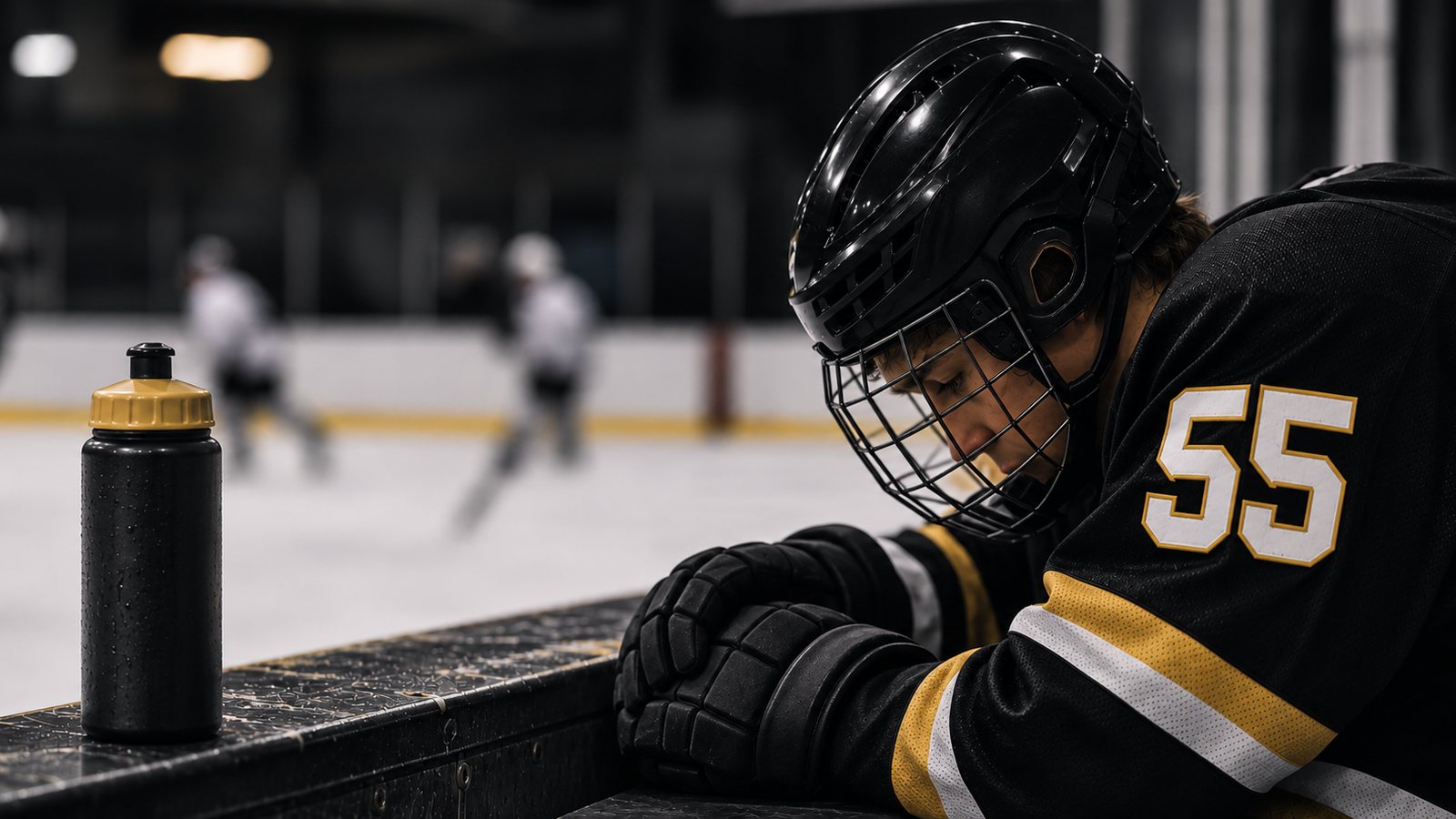
You can almost see the change immediately. Their head drops, their shoulders slump, and the next time they touch the puck, they can't get rid of it fast enough.
The same player who was making plays all week is suddenly just trying not to make another mistake.
I've seen this happen more times than I'd like, and it's frustrating because I know what that player is capable of. Their skill hasn't disappeared. They haven't forgotten how to play hockey. They've just stopped trusting themselves to use the abilities they already have.
When One Mistake Becomes Something Bigger
I don't think it's always the mistake itself that causes the biggest problem. It's what happens in the player's mind afterward.
- What if I mess up again?
- Is my coach upset with me?
- Did I let my teammates down?
Those thoughts can take over pretty quickly, especially with young athletes who are still learning how to handle pressure and disappointment.
Instead of recognizing the opportunities in front of them, they're worried about what went wrong on their last shift. They make the safe pass instead of the right pass. They hesitate when they have time and space. Plays they've made hundreds of times before suddenly feel risky.
The mistake is over, but the fear of making another one is now affecting how they play.
It's made me question something we say to young athletes all the time.
Maybe we need to spend a little less time telling players to play with confidence and a little more time helping them play with courage.
I've told players to be confident. Most coaches have. But what does that actually mean to a 13-year-old who's just turned the puck over and is worried about getting another shift?
It's easy to tell someone to be confident when things are going well. It's a lot harder for them to feel that way when they've just made a mistake.
A player doesn't always have to feel confident to make a good play. Sometimes they need the courage to try even when they're uncomfortable or unsure of themselves.
Carrying the puck through pressure, attempting a difficult pass, or challenging an opponent all involve some level of risk. Not every decision is going to work out, and that's part of hockey.
I'm certainly not suggesting players should be careless with the puck. There's a big difference between making a courageous play and making a poor decision.
But if we want young athletes to develop, we have to give them opportunities to become comfortable being uncomfortable. That means allowing them to take chances, make mistakes, and learn without becoming afraid to try again.
The Way We Coach Those Moments Matters
My background in teaching has had a huge influence on the way I coach.
After years in the classroom, one thing I've learned is that you can't expect every kid to respond to the same approach. Some need encouragement, some need a different explanation, and others need time to work something out for themselves.
Why would we expect hockey players to be any different?
As a coach, I know I can't expect every player to respond the same way after a mistake. Some want to talk it through. Others don't want to hear a word from me right away. Figuring out which approach works for each player is part of my responsibility, and it's something I take seriously.
That takes time and effort. It's not enough to know a player's strengths and weaknesses on the ice. We need to understand how they respond when things aren't going their way.
I also think we sometimes underestimate the value of asking questions instead of immediately telling players what they did wrong.
What did you see on that play? Why did you make that decision?
Those conversations are important because the decision and the outcome aren't necessarily the same thing.
A player can make the right decision and still turn the puck over because the execution wasn't there. They might also make a decision that looked questionable from the bench but made sense based on what they saw.
And yes, sometimes they simply make a bad decision. That's part of learning, too.
But if every mistake results in a lecture, I think we have to consider what message we're sending. Are we helping players become better decision-makers, or are we teaching them that the safest option is the one that won't get them in trouble?
It's something I think we need to be more aware of as coaches, especially when working with young athletes who are still developing their confidence.
The Next Shift Is Still Yours
As much as I believe coaches have a responsibility to support their players, I also believe athletes need to take ownership of how they respond.
We can't reset their emotions for them every time something goes wrong.
This is why I'm such a big believer in helping players develop their own personal reset.
It doesn't need to be complicated. For some, it might be a drink of water or a quick physical cue. For others, a few words of positive self-talk can make a difference.
Whatever it is, the purpose is the same: recognize the frustration, regain focus, and get ready for what's next.
I think the important part is having these conversations before something goes wrong. Help players recognize how they react to mistakes and what works for them. Give them a chance to develop something they can rely on when they need it.
There's also something we can't overlook, and that's body language.
You can often tell how a player is feeling just by watching them return to the bench. The frustration shows up in their posture, their facial expressions, and sometimes even how they interact with their teammates.
What young athletes don't always recognize is how much that can affect the people around them.
Body language is contagious, both positively and negatively.
Players have a responsibility to support their teammates through difficult moments, too. A tap on the pads, a few encouraging words, or simply showing someone you still believe in them can go a long way.
Nobody expects young athletes to be happy about making mistakes. Frustration is a normal part of competing. But learning to manage that frustration, rather than carrying it into the next shift or spreading it along the bench, is something worth working on.
What Are We Really Trying to Develop?
I don't believe confidence is something a coach can simply hand to a player. I also don't think it's fair to expect young athletes to figure everything out on their own.
To me, the best situation is when you have a coach who genuinely understands what each player needs and an athlete who's learning to recognize those needs for themselves.
The coach provides support while the player gradually learns to take ownership of their response. Both have a role to play, and the more they understand each other, the better that relationship becomes.
We also need to be realistic about what we're expecting from young athletes.
They're going to make mistakes. They're going to have bad shifts, poor games, and moments when they question themselves. That's going to happen no matter how talented they are.
I would much rather work with a player who's willing to attempt a difficult play, get it wrong, learn from it, and try again than one who's so afraid of making a mistake that they stop taking chances altogether.
As coaches, I think we have to ask ourselves whether we're creating an environment where players feel comfortable doing that.
When I think about the athletes I want to help develop, I'm not expecting them to become players who never make mistakes. I want them to trust their abilities, understand that mistakes are part of learning, and have the courage to keep competing when things aren't going their way.
And sometimes, before that confidence develops, they're going to have to find the courage to make the play anyway.